Can a Shop Vac Extract Water From Carpet? 6 Signs You Need More Than One
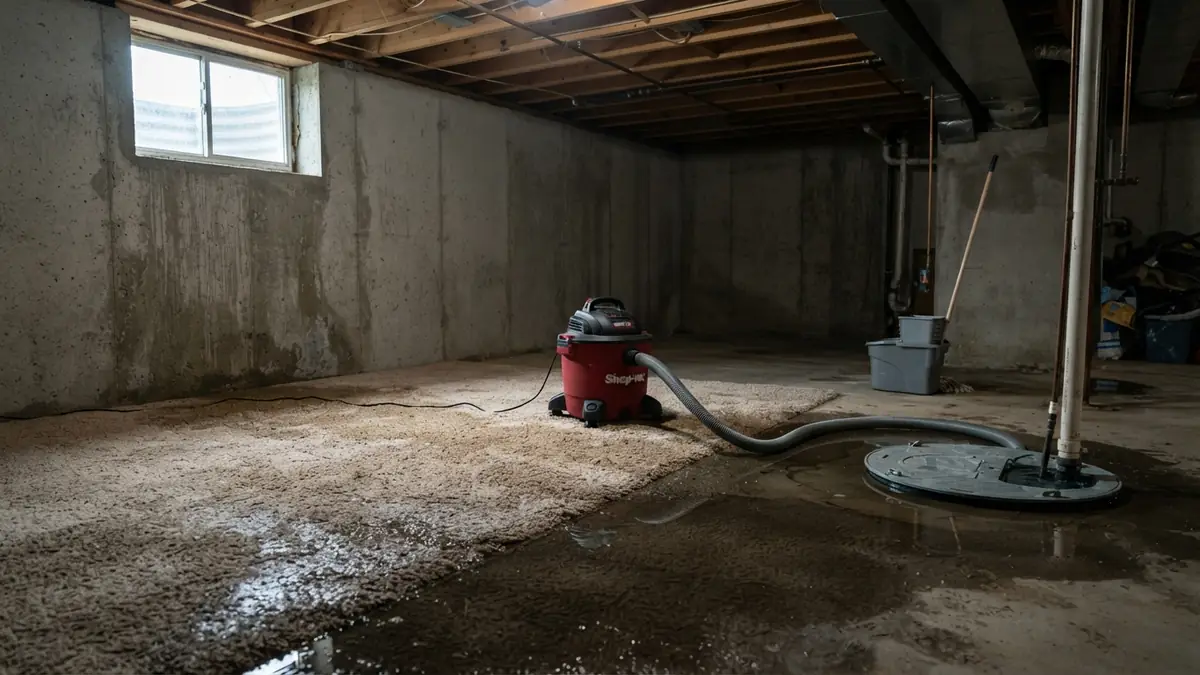
Yes. A shop vac pulls water out of carpet, and for a small clean spill it may be all you need. Plenty of homeowners have cleared an inch of water off a basement floor with one. Where it runs out of reach is the pad, the walls and the drying that has to come after.
Here is what a shop vac does well, what a crew brings that it does not, and six signs the job has outgrown it.
What a shop vac does well
It is good at the last inch of water on concrete or tile, at small carpet spills, and at pulling water out of a toe kick or a cabinet floor. Many models also reverse to blow air, which is handy for pushing air under lifted carpet or into a cabinet.
Two tips from people who have done it. A rented carpet cleaner run without any solution pulls more water out of carpet than a shop vac does. And when the sump pump is working, empty the vac into the pit through a strainer instead of carrying buckets up the stairs.
Technique matters more than the machine. Work slowly, press the nozzle or cleaner head down into the pile, push it forward rather than dragging it back, and go over each section several times from different directions. Then do it again the next day. A drying company's carpet test showed that re-extracting once a day while the fans run is what finally gets the bottom of the pad dry.
What a crew brings that a shop vac does not
Truck-mounted and portable extractors pull far harder than a shop vac and press into the carpet as they go. Submersible pumps clear inches of water. Air movers, dehumidifiers and a moisture meter finish the job, with a log showing it is dry. If you are weighing cost, a single room runs an estimated $300 to $1,200, and the guide to water extraction cost covers the rest.
1. The water keeps coming back
If the source is not stopped, or the sump pump cannot keep up, vacuuming is just bailing. Stop the water first, then extract.
For a pit or a low spot that keeps refilling, a small submersible pump with a hose to a drain beats any vacuum. One homeowner used an inexpensive fountain pump with snug tubing to lift water a few feet out of a crawl space pit. It was not automatic, so he switched it on whenever the rain came.
2. It is more than one room, or a whole basement
A shop vac holds a few gallons at a time. Across a full basement that means hours of filling and emptying, while the rest of the floor sits wet and the 24 to 48 hour mold window keeps running.
It can be done. One family with an old industrial shop vac and three helpers spent around seventeen hours getting the water, carpet and pad out of their basement after a hurricane knocked out the sump pump. That is a long day of heavy, wet work, and the drying still had to follow.
3. The pad is soaked wall to wall
A shop vac lifts water from the carpet face but pulls little out of a saturated pad below it. Left behind, the pad can stay wet for a week. That is when the carpet needs to come up or be extracted with proper tools. See whether the carpet can be saved.
4. The water was dirty
Washer water, sewage, a toilet with waste in it or storm water from outside means contact with contaminated water, discarded pad and cleaning before drying. That is not a weekend job with a household vac.
5. Water reached the walls, cabinets or under hard floors
Once water is in a wall cavity, inside a cabinet base or under laminate or vinyl plank, a vacuum cannot reach it. Those spots need baseboards off, holes drilled or planks lifted, and air sent in.
6. The readings are not dropping
If you have run fans and a dehumidifier for around three days and things still feel damp or smell musty, water is trapped somewhere. Without a meter you cannot tell where. That is the point to bring in a professional extraction crew rather than adding another fan.
Rented gear narrows the gap if you stay on top of it. A rental dehumidifier and a couple of flood fans, the big carpet blowers sold for exactly this, move far more air than household fans. They still need someone checking the readings and emptying the tank.
Quick answers
Can a shop vac extract water from carpet?
Yes, from the carpet itself. It pulls much less from a soaked pad underneath, which is where most of the water sits after a real leak.
Can you do water remediation yourself?
A small clean-water spill caught early, yes: extract it, get air under the carpet, run a dehumidifier and make sure it reads dry. Large areas, dirty water, wet walls or water under floors are where DIY tends to leave moisture behind.
What is the best way to extract water from carpet?
Slow, repeated passes with an extractor, or a rented carpet cleaner run without solution, pressing the head down into the carpet. Then air movers and a dehumidifier, re-extracting each day while it dries.
How to get water out of carpet without a wet vac?
Rent a carpet cleaner and run it empty, blot with towels by stepping on them, and pull the carpet back so air can reach the pad and the floor.
Water still on the floor?
A local crew can pump it out, extract the floors and price the drying in writing.