Water Extraction Cost: The 6 Things That Set the Price
Water extraction cost depends on three things more than anything else: how much floor got wet, what kind of water it was, and how many days the house needs to dry. Nobody can give you a real number over the phone before the wet area is measured, but the ranges are predictable once you know what a crew looks at.
Every figure here is an estimate for a typical home, not a quote. A single wet room runs an estimated $300 to $1,200. Extraction with a full drying setup comes to an estimated $1,200 to $4,000. A large loss, or a job with dirty water, reaches an estimated $4,000 to $12,000.
When you want a number for your own house, a local crew can measure the wet area and put the price in writing before anything is moved.
1. How much floor is wet
Crews price by the wet area, not by how many rooms it touched. Per square foot, extraction is estimated at $4 to $12, and where your job lands in that range depends mostly on the next item.
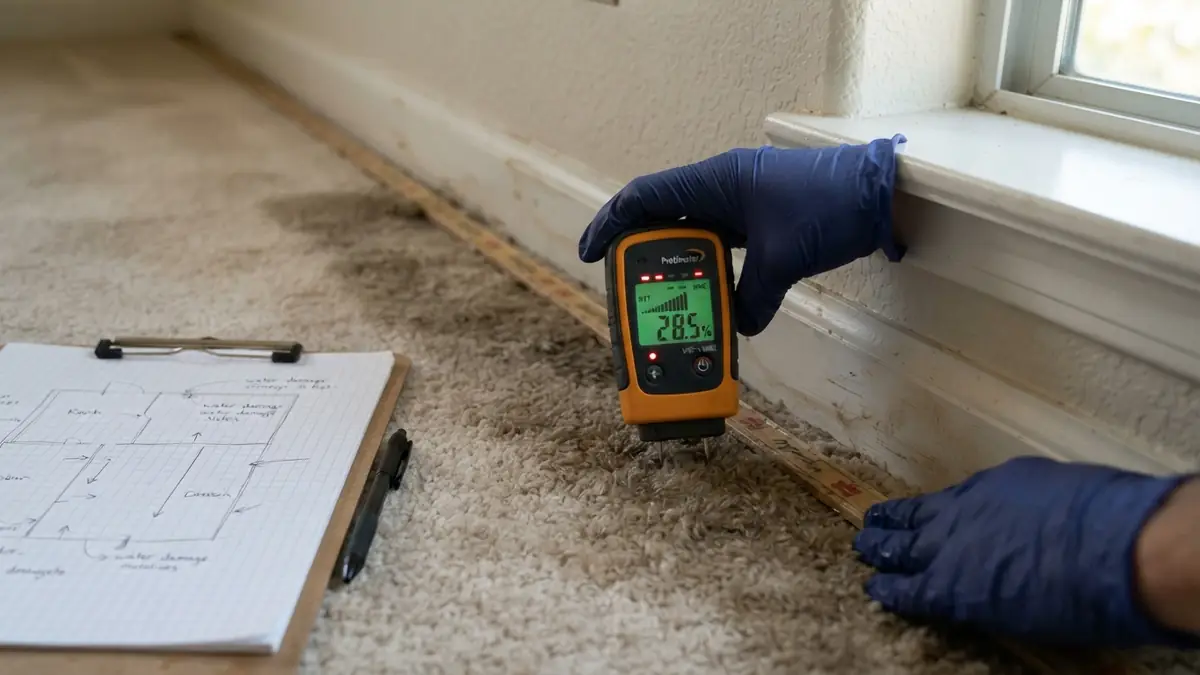
Expect the wet area to be bigger than the stain you can see. Water travels under baseboards, along the pad and under cabinets, so the meter usually finds a wet edge past the obvious puddle. That measured edge, in square feet, is the base of the quote.
2. Which category of water it is
Clean water from a burst supply line is the cheapest kind to deal with. Gray water from a washing machine or dishwasher means the pad usually goes and surfaces get cleaned. Sewage, a toilet with waste in it, or storm water that came in from outside means removing soaked materials, disinfecting and working in protective gear.
That is why the same room can sit at the bottom or the top of the per-square-foot range. The guide to clean, gray and black water explains how each category is decided.
3. Standing water that has to be pumped first
If there are inches of water on the floor, nothing gets extracted until it is pumped out. That means submersible pumps, hoses run well away from the house and someone watching the discharge. A basement pump-out with extraction of the floor is estimated at $500 to $2,500, before any drying is added.
4. What the water soaked into
Water on tile or sealed concrete comes up quickly. Water that soaked carpet pad, wicked up drywall, ran under laminate or vinyl plank, or got into the bottom of cabinets takes more labor, and some of those materials have to be cut out or lifted before the space underneath can dry.
Pad is a good example. Pulling and replacing a soaked pad is often less work than trying to dry it, so a quote may list it as removed even when the carpet above it is being kept.
5. How many days the drying equipment runs
After extraction, air movers and dehumidifiers run around the clock, and drying is usually charged per piece of equipment per day. Around three days is common for carpet after a clean-water leak. A soaked pad that was never extracted, water inside walls or humid weather can push that to five or six days.
It is fair to ask how many air movers and dehumidifiers will be set and roughly how many days the crew expects. The equipment should come out when the readings say dry, not on a date picked at the start.
6. How long the water sat before anyone started
Mold can take hold on wet materials within 24 to 48 hours. When extraction starts the same day, clean-water carpet and firm drywall are often dried and kept. After a few days, the list of things that have to be cut out and thrown away gets longer, and the job gets more expensive with it.
Estimated ranges at a glance
Small, one-room jobs: an estimated $300 to $1,200. Extraction with drying, which covers most calls: an estimated $1,200 to $4,000. Basement pump-out with extraction: an estimated $500 to $2,500. Large losses and dirty-water jobs: an estimated $4,000 to $12,000. Per square foot, the estimated range is $4 to $12, rising with the water category.
How to get a quote you can compare
Ask for a free quote in writing that lists the wet area in square feet, the water category, what will be removed, how many pieces of equipment will be set and when readings will be taken. Two written quotes that list those same things are easy to compare. Two numbers on the phone are not.
If you are thinking about doing part of it yourself, the guide to what a shop vac can handle shows where the line usually falls.
Quick answers
How much does it cost to extract water?
In a typical home, a single wet room runs an estimated $300 to $1,200, and extraction with full drying comes to an estimated $1,200 to $4,000. Dirty water or a large loss reaches an estimated $4,000 to $12,000.
What does it cost to get water out of a basement?
Pumping out a basement and extracting the floor comes to an estimated $500 to $2,500. If carpet, pad or the bottom of the drywall soaked up water, the drying days are added on top.
How much does water extraction cost per square foot?
The estimated range is $4 to $12 per square foot. Clean water sits at the low end, and sewage or outside floodwater at the high end.
How much to charge for water extraction?
Crews work from the measured wet area, the water category, what has to be removed and the number of days the drying equipment runs. A written quote should show each of those.
Water still on the floor?
A local crew can pump it out, extract the floors and price the drying in writing.