Can Wet Carpet Be Saved? 6 Things That Decide It
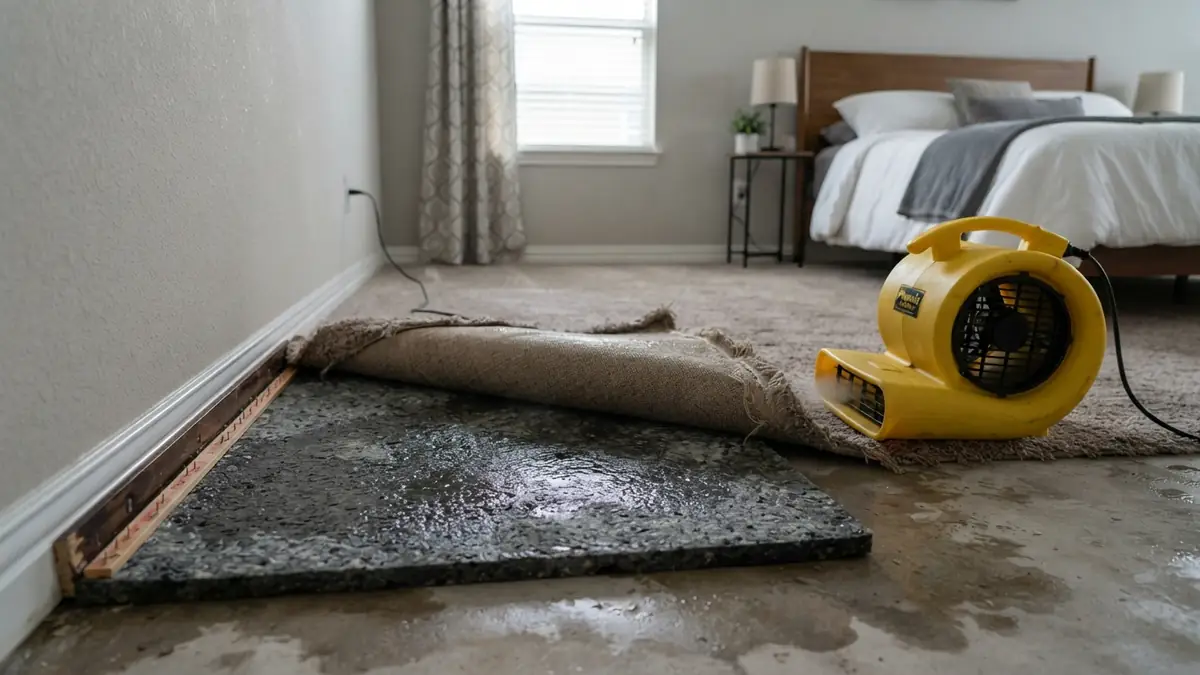
Often, yes. Carpet is tougher than most people expect, and a lot of it goes back down after a leak. The pad underneath is a different story, and so is carpet that sat in dirty water or stayed wet for days.
Six things decide whether yours comes back. Go through them before you start cutting strips for the curb, and before you spend a weekend with a box fan.
1. What kind of water it was
Clean water from a supply line, an ice maker line or a sink that ran over is the best case. Carpet soaked with it is usually worth drying.
Water from a washing machine is gray water. The carpet can sometimes be cleaned and kept, but the pad under it is normally replaced. Sewage, a toilet bowl with waste in it, or floodwater from outside is a different matter: carpet and pad that soaked it up are removed, not dried. The guide to water categories goes into each one.
2. How long it has been wet
Carpet and cushion that stay wet for 24 to 48 hours start to risk mold and mildew. Extracted the same day, clean-water carpet has very good odds. Found after a long weekend away, with the pad soaked the whole time, the odds drop and the smell usually tells you before the meter does.
If you need to get a crew to extract it the same day, call before you start pulling it up. Wet carpet comes off the tack strip easily, but stretching it back costs time.
3. The pad underneath
The carpet face dries much faster than the cushion below it. Pad holds water and odor, and a foam pad that is soaked through rarely dries well enough to keep. Pad with a waterproof liner traps water against the floor, so it is pulled as a rule.
This is why the common answer is: save the carpet, replace the pad. It is cheaper than replacing both, and the new pad goes in once the floor reads dry.
4. Whether the backing has let go
Carpet has a primary and a secondary backing glued together. Left wet too long, the glue can fail, and the layers separate. That is called delamination.
Signs of it are ripples that will not stretch out, a backing that peels apart at a cut edge, or carpet that dries stiff and crunchy. A delaminated carpet will not lie flat again, so drying it is wasted effort.
5. What the carpet sits on
Over a concrete slab, water spreads sideways under the pad and the concrete gives it back slowly, so the carpet has to be pulled back and air sent underneath. Over a wood subfloor, the subfloor itself needs a reading, because it can stay wet after the carpet feels dry. The wooden tack strip around the edges soaks up water too.
6. Whether the water gets extracted, not just blown on
One drying company ran a simple test. Two patches of thick carpet over pad got the same amount of water. One was extracted with a water extractor and then extracted again each day, the other was left alone. Both had a dehumidifier and air movers for three days. The extracted patch read dry. The untouched one was dry on top and still wet at the bottom of the pad, needing two or three more days.
Fans dry the top first, and baking soda and towels do nothing for a soaked pad. Water has to be physically pulled out before air can finish the job.
How a crew dries carpet in place
The usual method is to extract hard with repeated passes, release the carpet from the tack strip, pull and bag the wet pad, then float the carpet on air by blowing air movers underneath it while a dehumidifier runs. Readings are taken each visit. When the carpet and the floor read dry, new pad goes down and the carpet is stretched back.
Area rugs are simpler. After clean water, take them outside and dry both sides. After dirty water, let them go. If the house still smells musty a week later, read how quickly mold starts.
Quick answers
How long can carpet be wet before it is ruined?
There is no exact clock, but carpet and pad that stay wet for 24 to 48 hours risk mold, mildew and a failed backing. Extracted the same day, clean-water carpet usually survives. The pad is the part that often does not.
Will a wet carpet dry on its own?
The top will. The pad and the floor under it hold water much longer, so carpet that feels dry can still be wet at the bottom of the pad days later. Extraction plus air underneath is what gets it fully dry.
What will draw moisture out of carpet?
An extractor or wet vacuum pulls the water out. A dehumidifier pulls moisture out of the air so the carpet keeps giving it up, and air movers speed that up. Baking soda helps with smell, not water.
Can I leave wet carpet down to dry?
Only if the water was clean, it was extracted quickly and air can get underneath. Leaving it tacked down over a soaked pad is how carpets end up smelling musty.
Water still on the floor?
A local crew can pump it out, extract the floors and price the drying in writing.