How Long Does Water Extraction Take? The 5 Stages, Start to Dry
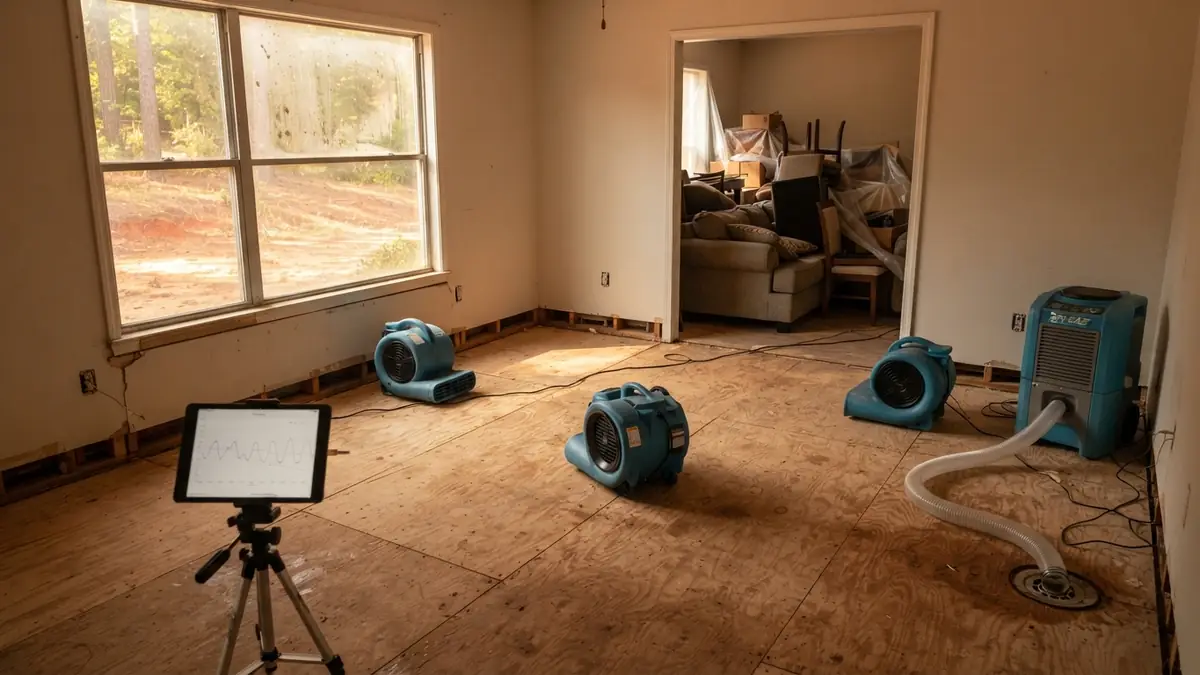
The extraction itself is quick. Pumping out standing water and pulling water out of carpet and floors is usually done on the first visit. The drying that follows is what takes days.
For a typical clean-water leak, drying equipment commonly runs around three days. A pad that soaked untouched, water inside the walls or humid weather can stretch that to four, five, six days or more. Here is what happens at each stage, and how you know it is really finished.
1. Stopping the source and mapping the water
Nothing useful happens until the source is stopped: the valve closed, the pipe capped or the sump running again. Then the crew walks the area with a moisture meter to find where the water actually went. It is usually further than the visible stain, under baseboards and into the next room. This first walk-through sets the size of everything that follows.
2. Pumping out standing water
Inches of water in a basement or garage come out with submersible pumps before any extraction starts. How long this takes depends on the depth and how quickly the water can be sent somewhere safe. A basement where the sump pump has quit can take a good part of the first visit on its own.
3. Extracting carpet and floors
Extraction tools are pushed slowly across the carpet, pass after pass, until very little comes up. Hard floors are vacuumed and squeegeed. This is the stage that decides how long the rest takes: every gallon pulled out now is a gallon the dehumidifiers do not have to pull out of the air later.
In one carpet test, a patch that was extracted and then re-extracted each day was dry after three days, while a patch left alone was still wet at the bottom of the pad.
4. Drying with air movers and dehumidifiers
Air movers blow across wet surfaces and under lifted carpet so water evaporates. Dehumidifiers pull that moisture out of the air so evaporation keeps going. Doors stay closed so the dehumidifiers work on one space, and the equipment runs day and night.
This is the stage you live with. Around three days is typical for clean water and carpet. If you want a crew to set and monitor the drying, ask how many pieces of equipment they plan and how often they will take readings.
The carpet test mentioned above used one dehumidifier and two air movers, each air mover aimed at its own wet patch. A real job is sized the same way: more wet area means more air movers, with dehumidifiers matched to the space.
5. Readings and the dry sign-off
Drying ends on readings, not on a date. The crew takes a reading on the same material in a part of the house that never got wet, then checks the wet areas against it each visit and writes the numbers in a drying log. When the wet spots match the dry reference and stay there, the equipment comes out.
Moisture meters read differently by brand and material, so a single number on its own means little. The comparison with dry material in your own house is what counts.
Running your own fans and dehumidifiers
Run them continuously, not just overnight, and keep the dehumidifier emptied or draining so it never shuts off full. Pick one rated for at least the size of the wet area. Aim for relative humidity under 50 percent in the room.
A dehumidifier will not dry a flooded basement by itself. It cannot remove standing water and it struggles with a soaked pad. Pump and extract first, then let it work.
What makes drying take longer
Wet pad left in place, water inside wall cavities, the inside of cabinets, a concrete slab giving water back slowly, cold rooms and humid outdoor air all add days. Walls are dried by pulling the baseboard and sending air into the cavity, as the guide to wet drywall after a leak explains. Floors that trap water are covered in water under laminate and vinyl.
Central air, if you have it, helps pull moisture out of the house while the equipment runs. Open the windows only on days when outdoor air is drier than indoor air, and right after a storm it often is not.
Quick answers
How long does water extraction take?
Usually one visit for the pumping and extraction. Drying commonly runs around three days for a clean-water leak, and longer when the pad, the walls or a concrete slab are holding water.
How long should I run a dehumidifier after a flood?
Until readings on the wet materials match the same materials in a dry part of the house, not for a set number of days. Run it continuously with the doors closed.
How long to leave fans running after a flood?
The same answer: until the readings say dry. Fans without a dehumidifier just move damp air around, so run both together.
Can a dehumidifier alone dry a flooded basement?
No. It cannot remove standing water, and it struggles with a soaked pad. Pump and extract first; then a dehumidifier sized for the space, with fans, does the drying.
Water still on the floor?
A local crew can pump it out, extract the floors and price the drying in writing.