Water Under Laminate Floor? 6 Things to Know Before You Pull It Up
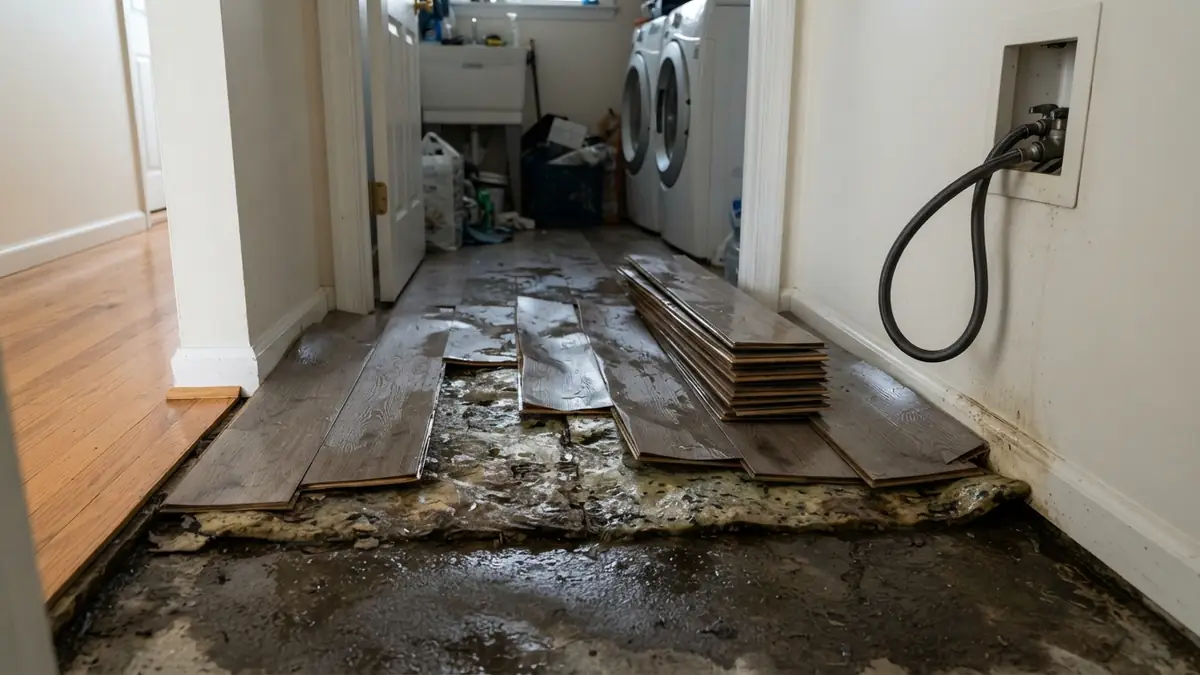
Water that gets under a floating floor is out of sight and out of reach of a fan. It sits on the underlayment and on the slab or subfloor, and the planks on top hold it there.
What you can save depends on the floor. Laminate, vinyl plank and hardwood react very differently, and the same leak can ruin one and barely touch another. These six points help you work out what you have and what it needs.
1. Signs the water got underneath
Edges that lift or peak at the seams, a soft or spongy feel underfoot, water squeezing up between planks when you step, damp baseboards next to the floor and a musty smell are the usual signs. On laminate, a raised ridge along a plank edge means the tongue has already swollen.
The surest check is to pull the baseboard on the wet side of the room and look at the edge of the floor and the underlayment. If the foam or felt under the planks is wet at the wall, it is wet further in.
2. Laminate: the core decides
Laminate looks like wood or stone, but its core is pressed fiberboard, much like MDF. Once that core takes on water it swells, and the swollen edges stay raised after it dries. A laminate floor that sat in water is rarely saved.
A small spill at the edge of a room, caught quickly, is different. Pulling the baseboard and the last row or two of planks and getting air underneath can save the rest.
3. Vinyl plank: the planks survive, the space under them does not dry
Solid vinyl plank does not absorb water. Boards left soaking in a tub for two days in one flooring test came out flat, with their click joints intact. The problem is underneath: water runs through the seams and sits between the planks and the underlayment, where it cannot evaporate.
The fix is to unclick the planks, dry the slab or subfloor, replace the underlayment and lay the same planks back. One homeowner who did this after a storm flooded his basement found more wet spots than dry ones under the vinyl, and still kept most of the planks for reuse.
4. Hardwood and engineered wood: watch it after it dries
Wood soaks water into its fibers, and those fibers never fully go back to where they were. A board can look fine when the surface dries and then cup or lift at the edges later. Often only the worst boards need replacing, not the whole room. One carpenter who has replaced water-damaged engineered floors says the call is always hard for that reason, and on one job he swapped out only six or seven boards and left the less damaged ones.
Hardwood dries slowly and needs readings over several days. Dark stains that soak into the wood may not sand out completely. It is worth having someone check the floor with a moisture meter before you decide either way.
5. Drying under the floor without tearing it out
For a floor that is worth keeping, small holes can be drilled at chosen spots, such as a knot or a dark line in the pattern where they will not show. Warm air is pushed through hoses into some holes while others are left open as vents so the moist air can escape. It works best on small areas caught early, with clean water.
On a floating floor, lifting a few rows at the wall and blowing air underneath can do a similar job. The guide to how long drying takes explains how the readings decide when to stop.
6. Water under the floor, but no leak you can find
When water shows up under a floor with no burst pipe in sight, the usual suspects are moisture coming up through the concrete slab, a slow drip from a supply line under a cabinet or behind an appliance, or condensation. A dishwasher drip can soak a cabinet floor and the subfloor for weeks before anyone sees it.
To test a slab, tape a square of plastic to the bare concrete overnight. Moisture under the plastic means it is coming from below. Until the source is found, any drying just has to be done again.
Basement slabs are where this shows up most. White, chalky marks or shapes on bare concrete are a sign that moisture is coming through it.
Quick answers
Will water under laminate dry out?
Not in any useful time. The planks cover it and the core swells while it waits. A small, fresh, clean-water spill near a wall can be dried in place; a floor that sat in water usually comes up.
How to dry out wet floor under vinyl flooring?
Unclick and lift the planks, dry the slab or subfloor with air movers and a dehumidifier, replace the underlayment, then lay the same planks back.
How long does it take for a hardwood floor to dry after a water leak?
Longer than carpet or vinyl. Wood gives up water slowly, so drying runs over several days and is tracked with readings, and some cupping only shows once the boards dry.
Why is there water under my floor but no leak?
Moisture rising through the slab, a slow hidden drip from a supply line or appliance, or condensation. A plastic square taped to the concrete overnight tells you whether it is coming from below.
Water still on the floor?
A local crew can pump it out, extract the floors and price the drying in writing.