Wet Drywall After a Leak: Keep It or Cut It? 5 Things That Decide
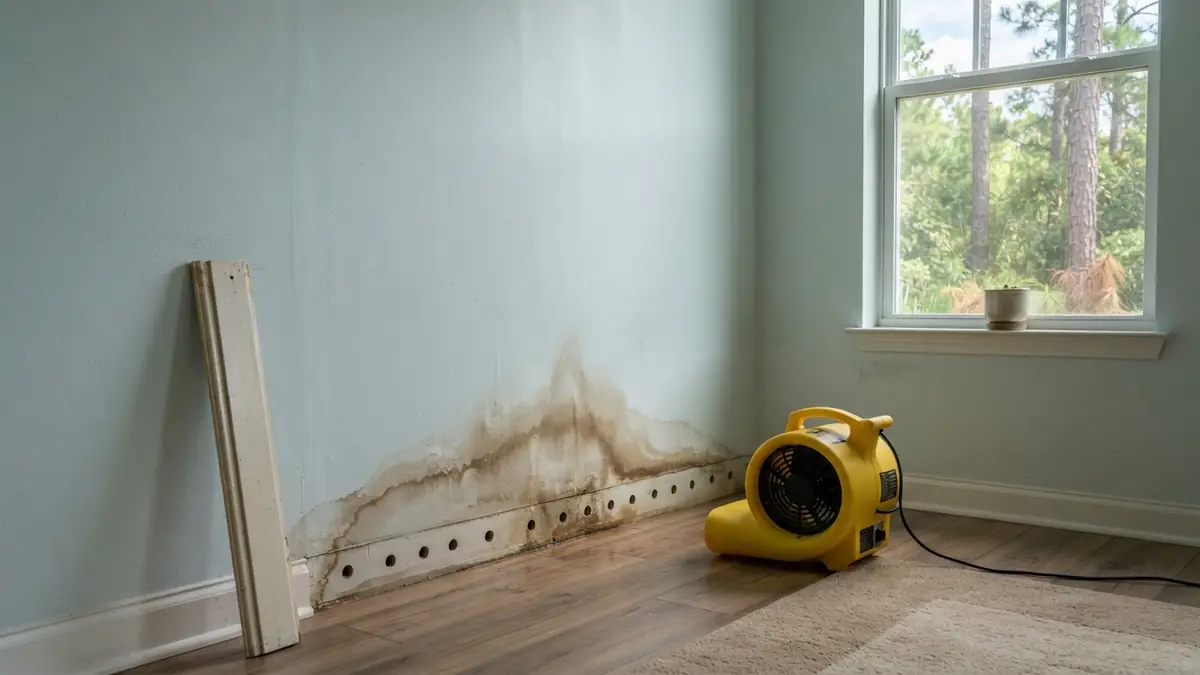
Drywall is gypsum with paper on both faces, and both soak up water. A wall that took water from a clean supply line can often be dried right where it stands. A wall that sat in dirty water, or stayed wet for days, usually has to be cut.
Five things decide which one you have. Check them before the saw comes out, and check what is behind the wall as well as its face.
1. What kind of water touched it
Clean water from a pipe or a supply line gives you the best chance of drying the wall in place. Sewage, a sewer backup or storm water from outside is another matter. Drywall it soaked is cut out above the wet line and thrown away, because the board cannot be cleaned on the inside. The guide to water categories explains where the line sits.
2. How high the water wicked
Drywall pulls water up above the waterline like a paper towel. After a basement flood, cutting out the bottom two feet is a common choice. After an inch of water, some people cut a strip of only a few inches. The safer rule is to find the top of the wet area with a meter and cut a little above it.
This cut is called a flood cut. Keep it level with a straight line snapped across the wall, so the new piece butts up cleanly later.
3. What is behind it
Insulation holds water against the back of the board long after the face looks dry. Plastic sheeting, vinyl wallpaper or paneling acts as a vapor barrier and traps water too. Anything wet behind a vapor barrier gets pulled.
If you cannot tell, cut a small inspection square low on the wall and look or feel behind it with a flashlight. It is a much smaller patch than a full flood cut.
Baseboards can buy the drywall some time. One homeowner with about an inch of water in his basement pulled the soggy baseboards off quickly, cut inspection holes where he could not see behind the board, found the back of the drywall dry, and kept it while watching it closely.
4. How long it has been wet
Wet drywall does not always grow mold, but the paper facing gives mold something to feed on, and the 24 to 48 hour window applies here too. A clean-water wall that gets air and a dehumidifier the same day often comes through with nothing to show. One that stayed wet behind furniture for a week often does not.
5. Whether it still holds its shape
Board that is soft when you press it, crumbling at the bottom edge, bulging, or opening at the taped joints has lost its strength, and drying will not bring that back.
Ceilings are the urgent case. A ceiling holding water sags. Keep people out from under it, put a bucket below the lowest point, and a small hole there lets the water drain out in a controlled way instead of bringing a section down.
Plaster is a different material. Older plaster walls cope with water better than drywall, provided they dry out again, and plaster over brick usually dries and stays sound. Go gently when scraping loose paint off a damp plaster wall.
Drying a wall you are keeping
Pull the baseboard first. Most baseboard is fiberboard and holds water against the wall. Then drill a row of small holes low in the drywall, where the baseboard will cover them, and aim air movers at the wall and into the holes so air moves through the cavity. A dehumidifier runs in the room, and readings are taken each day.
If the floor is wet too, it is one drying job, not two. When you want an extraction and drying crew to handle both, ask how they plan to dry the wall cavities.
Reading a moisture meter on drywall
People ask whether a reading of 15 percent in drywall is bad, or what a 99 means. Many pinless meters read on a relative scale rather than a true percentage, and the numbers change with the material setting. Treat a reading as wet or dry compared with the same wall in a room that never got wet, and take it in the same spots each day. Steady, matching readings mean dry.
Quick answers
Does wet drywall always have to be replaced?
No. Clean water caught quickly can be dried in place if the board is still firm. Drywall that sat in dirty water, wicked high, went soft or stayed wet for days is cut out.
Will mold always grow on wet drywall?
No. Drywall dried quickly after a clean-water leak often shows nothing. The paper facing feeds mold given time, though, so the longer it stays wet, the worse the odds.
How long does it take for drywall to dry after a water leak?
With the baseboard off, air sent into the cavity and a dehumidifier running, a clean-water wall usually dries over the same few days as the floor. Insulation or plastic behind it slows it down.
How do I dry out wet drywall?
Pull the baseboard, drill small holes low in the wall, aim air movers at the wall and into the holes, run a dehumidifier and check readings every day until they match a dry wall.
Water still on the floor?
A local crew can pump it out, extract the floors and price the drying in writing.