Water Damage Categories: What the 3 Types of Water Change About Extraction
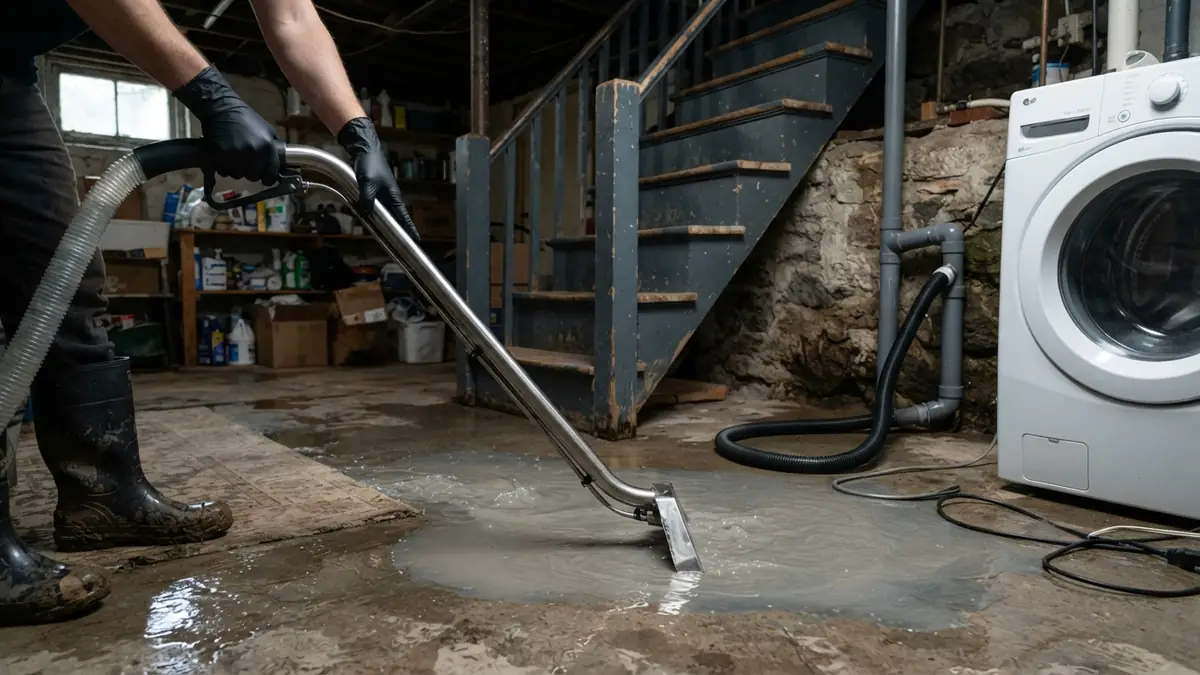
Not all water on the floor is the same. The drying standards restoration crews work to, the IICRC S500 among them, sort it into three categories by how contaminated it is. The category decides what can be dried, what has to go, and how the crew protects you and itself while it works.
Here is each one in plain terms, where it comes from in a house, and what it changes on the job.
1. Category 1: clean water
This is water from a clean source: a burst supply line, an ice maker line, a sink or tub that ran over with tap water. It is the easiest kind of loss to dry.
Carpet and pad are often extracted and dried in place, and drywall that is still firm is dried rather than cut. Jobs in this category sit at the low end of the price range.
A water heater that splits usually starts out in this category too, since it holds supply water. Where it lands matters, though. A tank emptying across a dusty garage floor or into a basement carpet picks up dirt on the way, and a crew judges the water by where it ended up.
2. Category 2: gray water
Gray water carries contamination that can make people sick: water from a washing machine, a dishwasher, or a toilet bowl that overflowed with urine but no waste in it.
The pad is normally replaced, the carpet is cleaned and disinfected if it is kept, and hard surfaces are cleaned before drying. Gloves and boots are standard.
A washing machine that overflows while it drains is the classic case. So is a neighbor's bathroom leak that comes through into your basement. The usual advice there is to get the carpet extracted quickly and run a dehumidifier and blowers to dry it fast, which holds as long as the water was not from a toilet with waste in it.
3. Category 3: black water
Black water is grossly contaminated: sewage, a toilet overflow with waste, a sewer backup through a floor drain, and floodwater that came in from outside, including storm water and river water.
Porous materials it soaked are removed, not dried. That means carpet, pad, the bottom of the drywall and insulation. Everything left is cleaned and disinfected, the area may be closed off, and the crew works in protective gear. Drying starts only after that.
Storm water that comes up through a basement floor drain belongs here even when it looks clear. When a hurricane's remnants hit the Northeast, rain pushed up floor drains and left basements under feet of water, and that water had come through the drain system on its way in.
Water can move up a category
Clean water does not stay clean forever. Water that sits for days, or runs across a dirty basement floor or through the soil on its way in, is treated as the next category up. Water from an upstairs toilet that comes through a ceiling picks up whatever is in the ceiling on the way. When in doubt, a crew treats it as the worse category.
Is an overflowing toilet a biohazard?
It depends on what came out of it. Water from the tank, or a bowl with only clean water in it, is category 1. A bowl with urine is category 2. A bowl with waste in it is category 3, and anything porous it soaked is thrown out.
For a small overflow onto tile: shut the valve behind the toilet, put on gloves, pull the water up, then clean and disinfect the floor and the bottom of the walls. If it ran into carpet or through the floor below, it is bigger than it looks, and the guide to wet drywall covers the ceiling and walls.
How the category changes the price
Per square foot, extraction runs an estimated $4 to $12, and the category is the main reason a job lands high or low in that range. A big dirty-water loss can reach an estimated $4,000 to $12,000. For sewage or storm water, look for crews that handle dirty-water extraction and ask how they protect the rest of the house while they work.
Quick answers
What is category 3 water damage?
Grossly contaminated water: sewage, toilet water with waste, sewer backups and floodwater from outside. Porous materials it soaks are removed rather than dried.
What is category 2 water damage?
Water with enough contamination to make people sick, such as washing machine or dishwasher water, or a toilet overflow with urine but no waste. The pad is usually replaced and surfaces are disinfected.
Is an overflowing toilet a biohazard?
If the bowl had waste in it, yes, and it is treated as category 3. Clean tank water is category 1, and a bowl with urine only is category 2.
How do you disinfect a basement floor after a flood?
Get the water and wet materials out first, scrub the concrete with a cleaner or disinfectant, then let it dry fully. Disinfecting a floor that is still wet underneath does not hold.
Water still on the floor?
A local crew can pump it out, extract the floors and price the drying in writing.